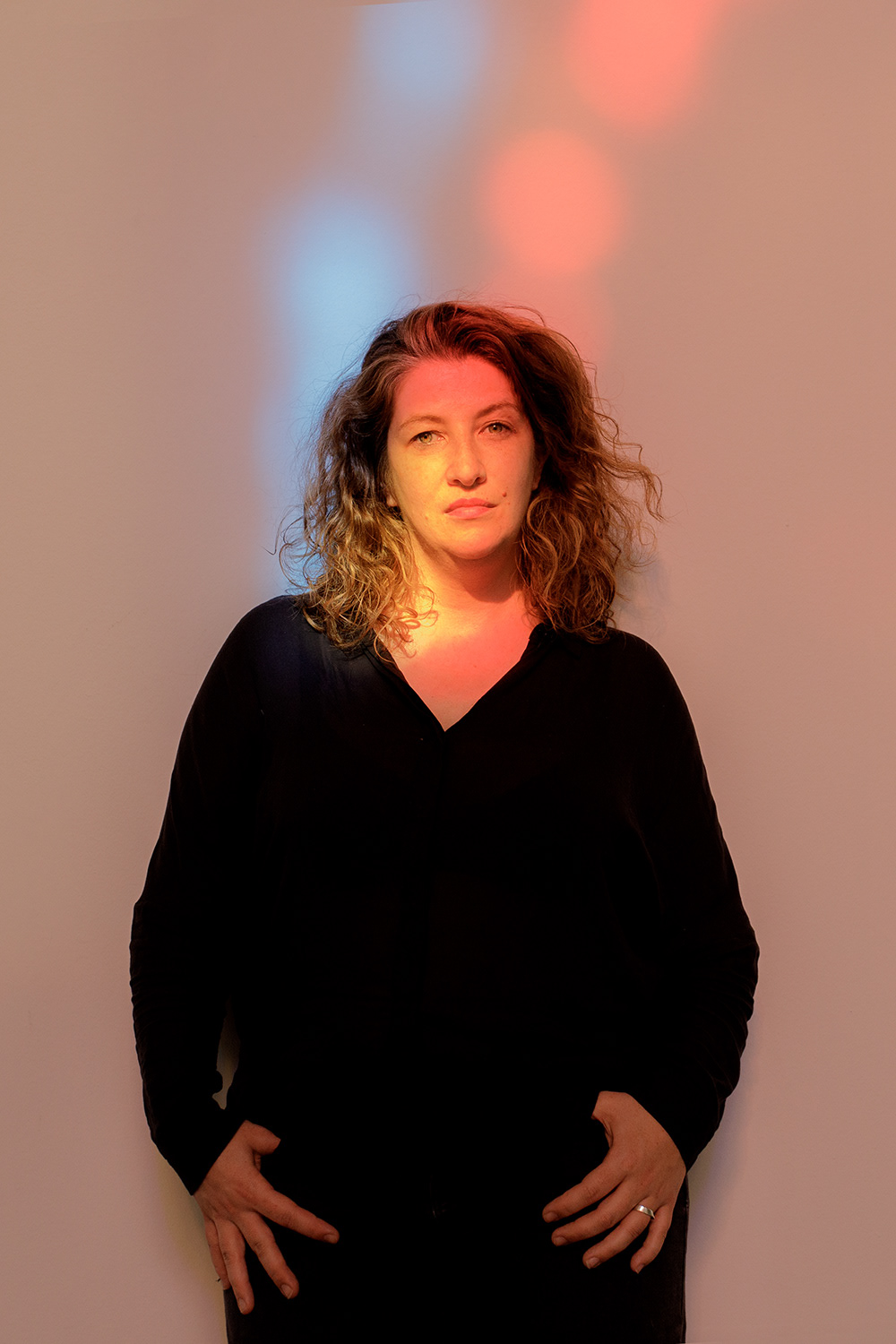
Chloé Kaufmann est une artiste photographe, cinéaste et autrice dont la pratique se déploie à travers la photographie, le film et l'écriture. Après un Master en théorie des arts et de la culture à l'Université Paul Verlaine de Metz, elle approfondit sa pratique de l'image à l'Institut des Arts et de la Diffusion de Louvain-la-Neuve. En 2021, elle obtient le Certificat de capacité à développer et diffuser un projet photographique d'auteur à l'ENSP d'Arles, affirmant son engagement dans une démarche d'œuvre au long cours.
C'est en 2012, à Athènes, au cœur des premières conséquences de la crise européenne, que son travail photographique prend véritablement forme. Sa série Greece : Democracy Wanted témoigne du basculement politique de cette crise démocratique. Sa rencontre avec Ahmad, réfugié syrien, oriente sa sensibilité vers les récits de l'exil et de la résistance. Il en naît Woman's Work, lettre de Syrie, film expérimental co-réalisé à Istanbul avec Nolwenn Daste, distribué par SONGES puis sélectionné dans des festivals internationaux majeurs : DOK Leipzig, This Human World (Vienne), le Festival International du Court-Métrage de Thessalonique.
Sa pratique se caractérise par une mobilité géographique et formelle assumée : résidences en Haïti (2018), au Canada (2019), au Burkina Faso (2017), et par une capacité à faire surgir l'intime depuis ces territoires. Sa série Contre-chant, née d'une résidence à Jacmel, mêle photographie et poésie visuelle. Elle est présélectionnée au Fotodoc Brésil 2025 et exposée aux Sténopédies. Douce Maison Douce, œuvre aux lisières de la photographie et de la prose poétique, est publiée dans les revues Pourtant et Tinnitus Mag et présentée dans l'exposition collective RESISTER aux côtés de nandre et Marie Docher. En 2025, son travail est présenté en Grèce, en Bosnie-Herzégovine (où elle est finaliste du Sarajevo Photography Festival) et en Suisse au festival Fantoche de Baden.
Parallèlement, elle développe une activité de transmission en tant que photographe intervenante après sa formation avec le Réseau Diagonal, nourrissant sa pratique d'un rapport continu à la pédagogie et au partage du regard.
///
Chloé Kaufmann is a photographer, filmmaker, and writer whose practice spans photography, film, and writing. After earning a master’s degree in arts and culture theory from Paul Verlaine University in Metz, she further developed her visual practice at the Institut des Arts et de la Diffusion in Louvain-la-Neuve. In 2021, she earned the Certificate of Competence in Developing and Promoting an Authorial Photography Project at the ENSP in Arles, affirming her commitment to a long-term artistic practice.
It was in 2012, in Athens, at the height of the initial fallout from the European crisis, that her photographic work truly took shape. Her series Greece: Democracy Wanted bears witness to the political upheaval of this democratic crisis. Her encounter with Ahmad, a Syrian refugee, directed her focus toward narratives of exile and resistance. This led to Woman’s Work, Letter from Syria, an experimental film co-directed in Istanbul with Nolwenn Daste, distributed by SONGES and subsequently selected for major international festivals: DOK Leipzig, This Human World (Vienna), and the Thessaloniki International Short Film Festival.
Her practice is characterized by a deliberate geographical and formal mobility—including residencies in Haiti (2018), Canada (2019), and Burkina Faso (2017)—and by an ability to bring forth the intimate from these places. Her series Contre-chant, born out of a residency in Jacmel, blends photography and visual poetry. She was shortlisted for Fotodoc Brazil 2025 and exhibited at Les Sténopédies. Douce Maison Douce, a work straddling the boundaries of photography and poetic prose, was published in the journals Pourtant and Tinnitus Mag and featured in the group exhibition RESISTER alongside Nandre and Marie Docher. In 2025, her work was presented in Greece, Bosnia and Herzegovina (where she was a finalist at the Sarajevo Photography Festival), and in Switzerland at the Fantoche Festival in Baden.
At the same time, she developed a teaching practice as a guest photographer following her training with the Réseau Diagonal, enriching her work through an ongoing engagement with pedagogy and the sharing of perspectives.